In Uganda today, a notable percentage of families are faced with episodes of limited provision or at least confess to occasional struggles towards what they consider a desirable, sustainable and developmental socio-economic livelihood. This has a strong correlation to the nature of their standard of living in relation to their locality, urban or rural and their access to the very basic necessities of life – Housing/Shelter, Employment and financial inclusion, access to reliable Healthcare Services, Clean water, Food security, Electricity or clean energy, Education and market ready skills among others.
UBOS Reports on Poverty levels
In 2022, the Uganda Bureau of Statistics (UBOS) did an in-depth report on poverty rates in the country using multiple dimensions of household and individual deprivations. The Multidimensional Poverty Index (MPI), a method developed at the University of Oxford takes leverage of Uganda’s National Household Surveys of 2016/17 and 2019/20 to benchmark and track multiple deprivations that people face in line with Sustainable Development Goal 1 (SDG 1): Ending poverty in all ways. The report reveals that a notable number of Ugandans are deprived in multiple ways, with the Northern region facing higher deprivations compared to Central, Eastern and Western regions. The Northern region faced deprivations that are above the national average in multiple indicators. The findings reveal marked geographical disparities highlighting poverty as largely driven by the living standards dimension.
Sample Deprivations by total population in 2019/2020
Access to Improved Toilet facilities
75%
Housing Materials
65%
" The Northern region faces deprivations that are above the National average in multiple indicators"
16.1%
Poverty Rate (2025)
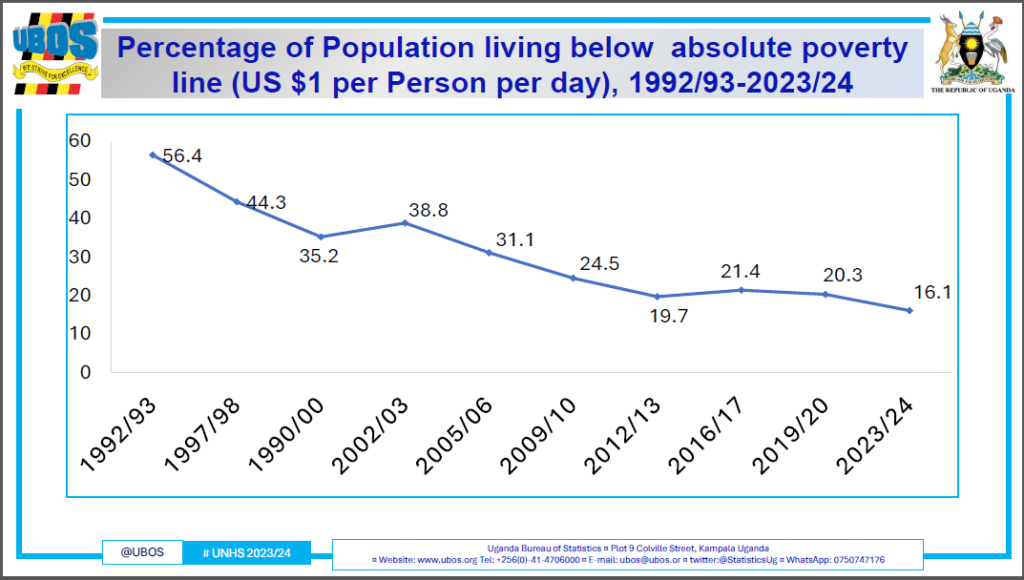
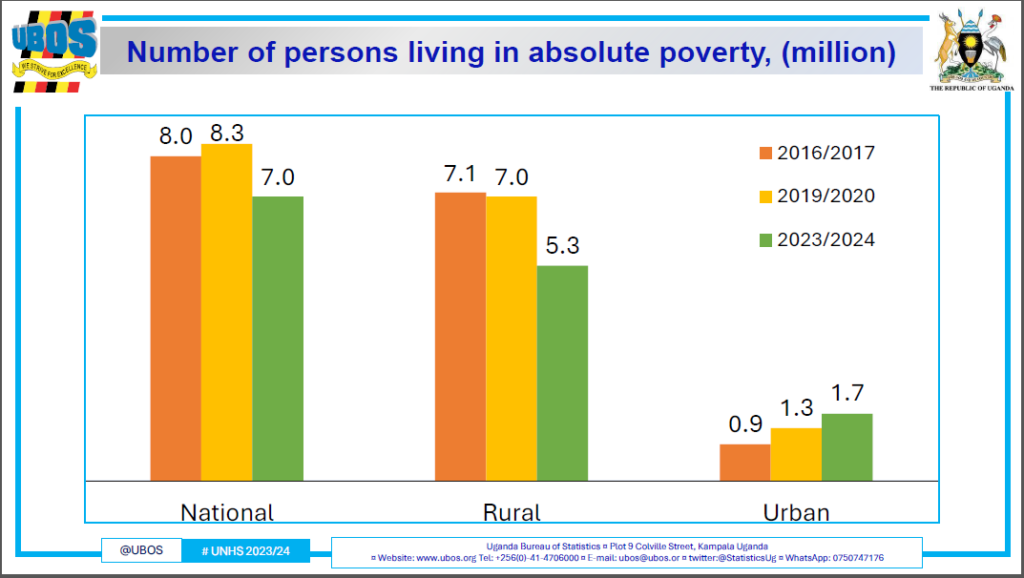
Another National Household Survey conducted by UBOS in 2025 reveals that Uganda’s national poverty rate stands at 16.1%. This translates to roughly 7 million Ugandans living below the national poverty line of 1 dollar a day (approximately 3,600UGX at the time of this survey). While this signifies a decrease from 20.3% in 2019/2020, regional disparities persist, with some rural areas still experiencing a significantly higher poverty rate.
7 million Ugandans living below the National Poverty line of 1 Dollar a day in 2025
Poverty trends over the years
A Fact About Marginalized Groups
In the same context, with focus on the statistics as reported above, one can only imagine the intensity with which these same circumstances impact the households of marginalized families that actually have children, youths or adults living with disabilities, refugees inclusive.
In addition to their already inevitably difficult circumstances, misconceptions by society and refugee host communities play a great role towards stigma and isolation of this marginalized group, leaving them with limited or no opportunities to contribute towards their general livelihood due to naturally non inclusive communities or environments, especially in some rural setting, where there is hardly any adequate social support system
We Are Here For The Marginalized
KDA currently has over 260 families of children and youth with marginalized disabilities. These are spread out in Northern, Western and Central parts of Uganda. About 40% are refugees from neighboring countries like Democratic Republic of Congo, South Sudan, Burundi and Somalia among others.
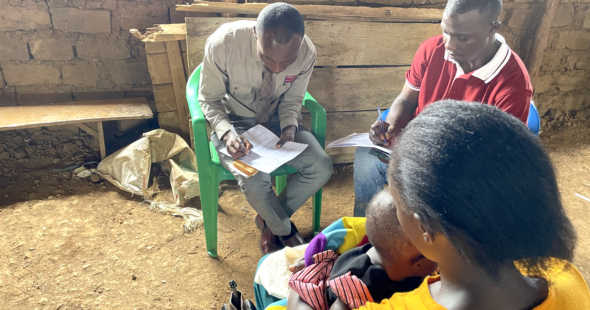
In conjunction with our partners, our support track for marginalized groups enables us understand their general livelihood, putting us at an advantage towards developing an efficient and sustainable economic support program given the fact that we get to understand their challenges and patterns of life through our support and rights advocacy services for people living with disabilities.
This program focuses on improving the livelihood of people with disabilities through empowerment in terms of skills and competencies in managing viable Income Generating Activities (IGAs), as well as empowering households with children and youth with disabilities to be able to meet their basic needs. Through our routine interaction with parents, caregivers and several people with disabilities, we idealized a number of projects and known profitable income generating activities (IGAs) that households with marginalized people would be able to manage and in turn provide for their daily livelihood while realizing a return on investments. The activities idealized are classified under these categories:
Agriculture
Animal Husbandry(Livestock)
Crop Husbandry(Crop Farming)
Bee Keeping
Creative/Vocational Skills
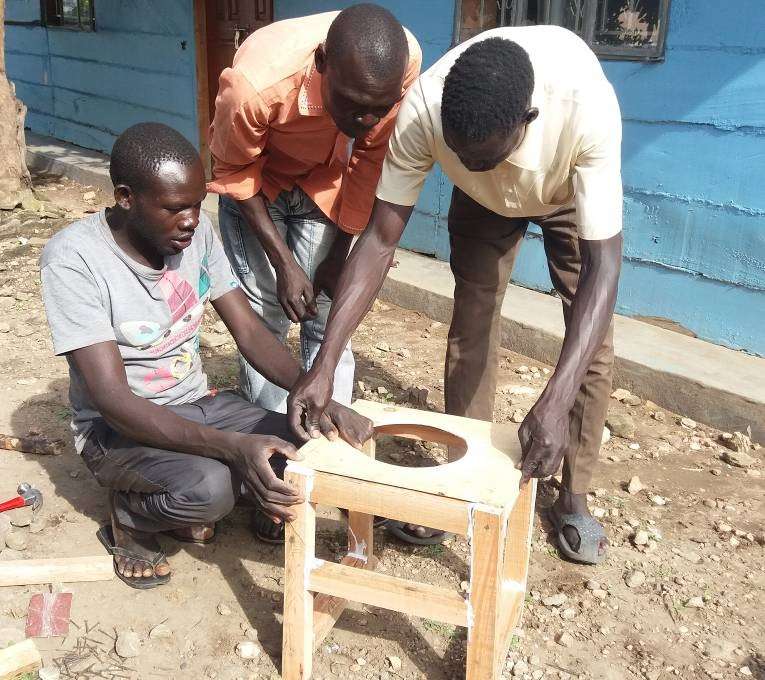
Carpentry and Wood Joinery
Tailoring
Art and Crafts
Welding and Metal works
Culinary Skills and Services
Cookery
Establishing IGAs helps to improve the incomes of the families, their capacity to meet the needs of people with marginalized disabilities and ultimately contributing to their independent living. In our current care circle, over 80% of the families require support financially or materially to enable them establish sustainable these Income Generating Activities.
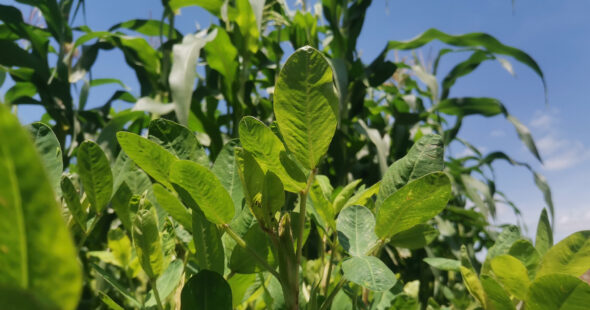
Agriculture as an IGA
In Financial Year 2022/2023, Agriculture accounted for about 24% of Uganda’s GDP, and 35% of export earnings, engaging about 68% of the country's working population at the time
CREATIVE & VOCATIONAL SKILLS
A recent article by Business Times Uganda suggests that there has been a shift and more young Ugandans are enrolling for vocational and technical skills not out of desperation but rather with a well thought out vision to acquire skills that develop them as immediately employable, self-reliant and at a competitive advantage in an ever changing economy.
Vocational training skills once attained can quickly lead one into a path of direct self-employment, entrepreneurship and self-reliance. With the right resources, vocational skills can turn one into a direct employer.